

Quick answer: BPC-157 research is mostly animal work. Reviews describe a large body of preclinical studies on tendon, muscle, bone and gut models, but only a handful of very small human reports and no randomized controlled trials. The evidence is far weaker than the online discussion suggests, and vendors sell it for laboratory research use only, not for human or animal use.
What is BPC-157 and where did it come from?
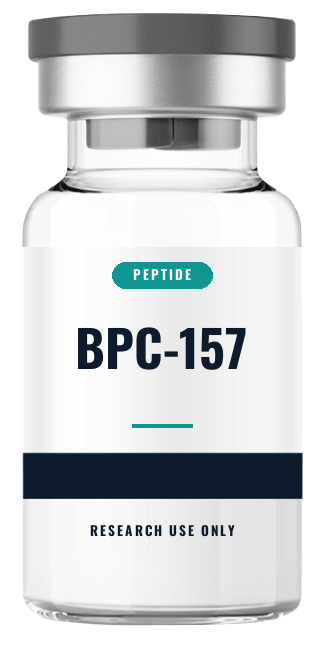
BPC-157 is a synthetic pentadecapeptide, meaning a chain of 15 amino acids. Its other names include Body Protection Compound-157, PL 14736, Bepecin, PL-10 and Pentadecapeptide BPC 157. The sequence and a molecular weight of about 1,419.54 Da are listed in an HHS policy appendix.
It was first described in the early 1990s from work on a protein found in human gastric juice, according to STAT’s February 2026 report. It is not an approved medicine. You can see our listings on the BPC-157 peptide page.
What kinds of studies exist on BPC-157?
Published reviews agree on the broad shape of the evidence: plenty of animal data, very little human data. The table sorts it by study type.
| Study type | What it examined | Evidence strength |
|---|---|---|
| Animal models | Tendon, ligament, muscle and bone healing; gut lining protection; nerve injury; blood vessel growth | Substantial in volume, but preclinical only |
| Mechanism and pharmacology reviews | Angiogenesis (new blood vessel formation), fibroblast activity, absorption and distribution in animals | Descriptive; pharmacokinetic data are limited |
| Human reports | Small, mostly uncontrolled studies in knee pain, bladder and a short safety check | Very low certainty |
| Randomized controlled trials | None identified in the reviews we found | Absent |
What do the animal studies cover?
A systematic review of 36 studies from 1993 to 2024 found that animal studies reported healing effects in musculoskeletal models. A narrative review likewise notes substantial preclinical evidence in tendon, ligament, muscle and bone.
Another narrative review describes strong preclinical evidence involving angiogenesis and fibroblast activity. A review of preclinical mechanisms also covers gut protection and effects on the nervous system in animals.
Animal results do not establish what a compound does in people. Several reviews stress that point.
How much human evidence is there?
Very little. A systematic review of human evidence found only three small studies: a retrospective knee study with 16 people, a bladder study with 12 and a safety report with 2. Symptom improvement was reported, but the review rated certainty as very low and study quality as poor.
The sports medicine review above found one human study of 12 people with chronic knee pain and no human safety data. A separate review counts three human studies with fewer than 30 subjects in total and no randomized trials.
What is still unknown?
- Long-term safety in any species, which reviews describe as lacking.
- Pharmacokinetics, meaning how the compound is absorbed and cleared.
- Whether animal findings hold up in controlled human trials.
- Unpublished work. The Atlantic reports that some animal results remain unpublished and that human safety data are lacking.
What is the regulatory picture in 2026?
BPC-157 is not FDA-approved for any use, as a literature and patent review states. The policy appendix above says the FDA declined to add it to the 503A compounding bulk list.
The news since then has been mixed. AP reported in April 2026 that an FDA panel reviewed BPC-157 studies and described them as short, small and exploratory. AP has also reported on an HHS draft policy that may ease access to unproven peptides despite FDA opposition. Policy is moving, but the evidence base has not changed with it.
What does our vendor data show for BPC-157?
From our tracking on November 22, 2026, we follow 136 vendors with 282 BPC-157 listings. Vial sizes run from 4 mg to 157 mg. The most common are 10 mg (133 listings) and 5 mg (56 listings).
| Vial size | In-stock listings | Low | Median | High |
|---|---|---|---|---|
| 5 mg | 56 | $11.99 | $35.00 | $369.99 |
| 10 mg | 133 | $16.95 | $49.90 | $900.00 |
| 20 mg | 15 | $36.00 | $86.00 | $110.00 |
The top-scored vendors differ a lot on testing. BioLongevity Labs (TVF Score 81) has 0 COAs for this peptide in our data. OneDay Compounds (75) has 3 COAs, all verified, from ILS Laboratories. Molecular Solutions Peptides (71) has 7 COAs from Freedom Diagnostics and Janoshik. Soraci Labs (66) has 2 verified COAs from Vanguard Laboratory. We call a COA verified when a real independent lab tested the lot within the last 8 months. You can compare BPC-157 prices across all vendors.
What should a buyer take from BPC-157 research?
Treat BPC-157 as an under-studied research compound. Because the published record is thin, the identity and purity of what you buy matter more, since results from a mislabeled or degraded vial would add noise to an already limited field.
- Look for a COA tied to the lot. It should show the lab name, lot number and test date.
- Check purity and identity. HPLC (a method that separates and measures the compound) gives purity. Mass spectrometry confirms identity. For reference, an LGC reference standard COA from February 2026 reports 95.68% HPLC purity and a molecular weight of about 1,419.54 Da.
- Match the mass. A COA that does not show the expected molecular mass for a 15-amino-acid peptide is a warning sign.
- Be wary of recycled reports. Our guide to reading a peptide COA and our list of vendor red flags explain how.
Nothing here suggests BPC-157 is safe or effective for people or animals. Vendors sell it for laboratory research use only.
Frequently asked questions
Has BPC-157 been tested in humans?
Only in a few very small studies, with fewer than 30 people in total according to one review. A systematic review rated the certainty of that evidence as very low.
Is BPC-157 FDA-approved?
No. It is not approved for any indication, and the FDA has not added it to the 503A compounding bulk list.
Why is BPC-157 called a pentadecapeptide?
“Pentadeca” means fifteen. The compound is a chain of 15 amino acids.
What does PL 14736 mean?
It is another name for BPC-157, alongside Bepecin and PL-10. Vendors and papers use these names for the same sequence.
Are there randomized trials of BPC-157?
The reviews we found report none. They describe only small pilot or uncontrolled human studies.
How many BPC-157 vendors publish a verified COA?
Among the top-scored vendors in our November 22, 2026 data, OneDay Compounds, V8 Peptides, BioCollex, Data Peptides and Soraci Labs each list verified COAs for this peptide. The full picture is on our BPC-157 page.
The Vial Files tracks research peptide vendors, their prices by vial size and their lab results, and scores every vendor on price, reviews, verified COAs, location, stock, website trust and payment options. Prices change often, so always check the live comparison.
Compare BPC-157 pricesBPC-157 overviewAll vendorsResearch peptides are sold by vendors for laboratory research use only and are not for human or animal use. Some of these compounds are also the active ingredient of approved prescription medicines; research-grade products are not those medicines. This article is for education only and is not medical advice. Prices and vendor details come from our tracking on the date of writing and can change. Some links on The Vial Files are affiliate links, which never change our scores.




Leave a Reply
You must be logged in to post a comment.